


ISO 20000 Certification Audit: Complete 2026 Guide
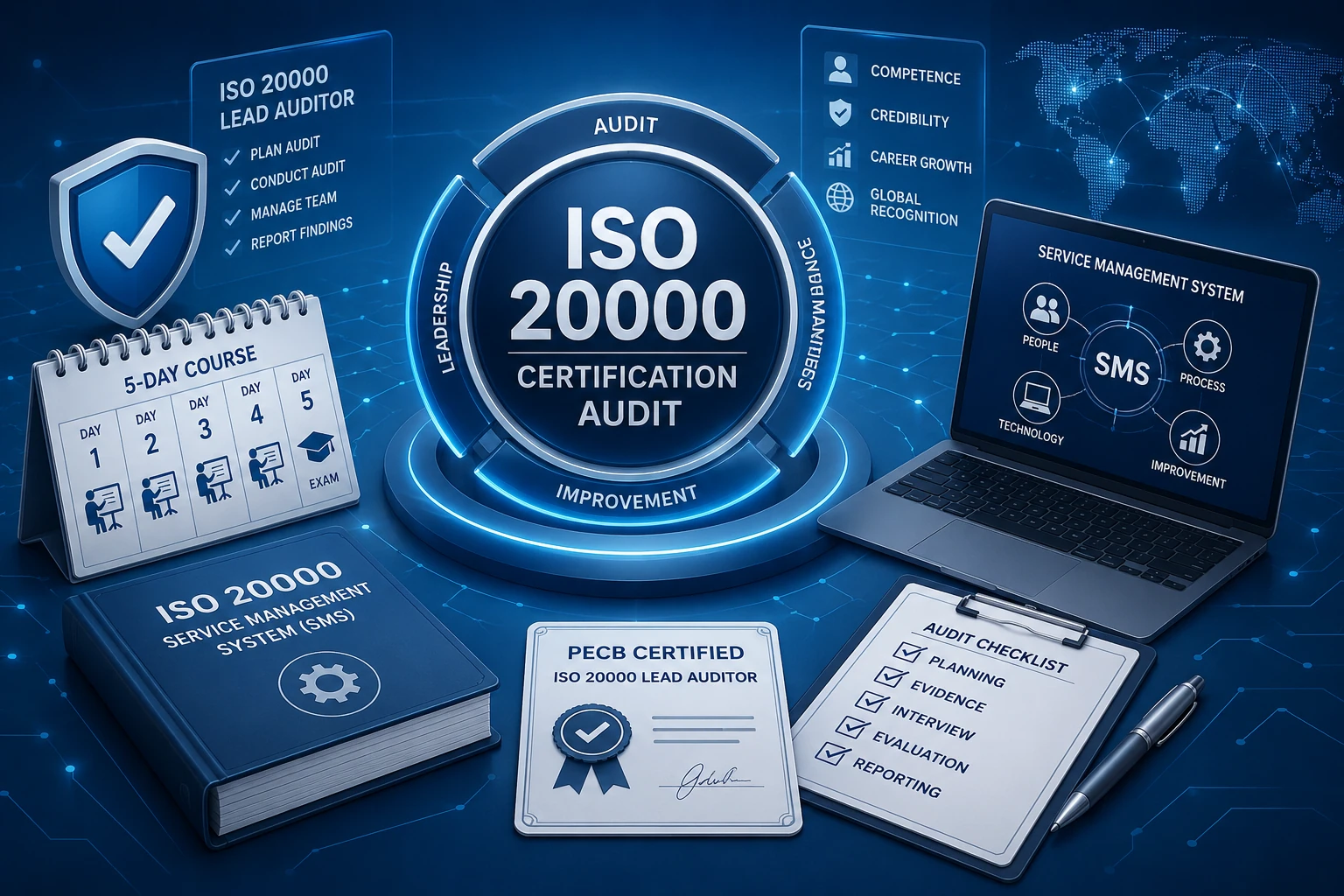
An ISO 20000 certification audit is an independent assessment of an organization’s service management system against ISO/IEC 20000-1 requirements. It evaluates whether the organization has established, implemented, maintained, and continually improved the processes needed to plan, deliver, monitor, and improve its services.
What should an organization expect during an ISO 20000 certification audit?
This guide explains the audit process, preparation priorities, common nonconformities, certification and accreditation terminology, and practical steps that can help an organization demonstrate an effective service management system.
An ISO 20000 certification audit matters because it provides an independent evaluation of whether service management processes are controlled, consistently applied, and capable of delivering agreed outcomes. Thorough preparation also helps an organization identify gaps before they become formal audit findings.
The ISO 20000 certification audit is an important part of the conformity assessment process. It determines whether an organization’s service management system is operating as intended and meets the applicable requirements of ISO/IEC 20000-1.
Successful preparation involves more than collecting documents shortly before the audit. The organization must be able to show that its policies, responsibilities, service management processes, controls, and improvement activities are established and working in practice.
What Is an ISO 20000 Certification Audit?
An ISO 20000 certification audit evaluates a service management system against ISO/IEC 20000-1. The current requirements standard is ISO/IEC 20000-1:2018, together with applicable amendments.
The standard uses the term service management system, or SMS. The audit considers whether the organization has established and controlled the processes needed to plan, design, transition, deliver, monitor, and improve services.
The auditor reviews documented information, operational evidence, assigned responsibilities, performance results, and the way employees apply the service management system in their daily work. Certification depends on whether the organization can demonstrate conformity within the defined certification scope.
Why an ISO 20000 Audit Matters
The audit provides independent assurance that the service management system has been evaluated against recognized requirements. It can also help customers and other interested parties understand how the organization governs and improves its services.
Internally, audit preparation can reveal unclear responsibilities, incomplete records, inconsistent service controls, weak performance monitoring, or gaps between documented procedures and actual practice.
Certification does not guarantee flawless services or permanent compliance. It confirms that the service management system met the applicable certification requirements at the time of assessment and remains subject to ongoing surveillance and recertification activities.
Review ISO 20000 certification audit support →
How the ISO 20000 Certification Audit Process Works
A certification audit is normally completed through a structured assessment process. The precise sequence, timing, and corrective-action requirements are established by the selected certification body and the applicable certification programme.
The main stages commonly include the following activities:
- Application and scope confirmation: The organization and certification body confirm the locations, services, processes, organizational units, and boundaries included within the proposed certification scope.
- Stage 1 assessment: The auditor reviews the organization’s documented information, readiness, scope, internal audit activity, management review, and overall preparation for the main assessment.
- Stage 2 assessment: The auditor evaluates implementation and effectiveness through interviews, records, observations, sampling, and evidence from service management activities.
- Nonconformity management: When findings are raised, the organization completes corrections and corrective actions within the timeframe established by the certification body.
- Certification decision: An authorized certification decision is made after the audit evidence and any required corrective actions have been reviewed.
- Ongoing surveillance: Periodic surveillance audits assess whether the certified management system continues to conform and operate effectively.
The certification decision should remain independent of the personnel who performed the audit. ISO itself develops and publishes standards but does not conduct certification audits or issue ISO certificates.
What Should Be Included in an ISO 20000 Audit Preparation Checklist?
Audit preparation should cover the entire service management system rather than focusing only on written procedures. Auditors will expect documented requirements to be supported by evidence of consistent implementation.
The preparation review should address the following areas:
- Organizational context: Confirm relevant internal and external issues, interested parties, service requirements, and the defined scope of the service management system.
- Leadership and governance: Verify that leadership responsibilities, policies, objectives, authorities, and accountability are clear.
- Planning and risk management: Review risks, opportunities, service management objectives, planned changes, and actions intended to achieve required outcomes.
- Resources and competence: Confirm that employees have the competence, awareness, information, tools, and resources required for their responsibilities.
- Service portfolio and relationships: Review service requirements, agreements, suppliers, customers, and other parties involved in service delivery.
- Service design, transition, and delivery: Verify that new or changed services are planned, controlled, accepted, and supported throughout their lifecycle.
- Operational controls: Review incident, request, problem, change, configuration, availability, capacity, continuity, service reporting, and related operational activities where applicable.
- Performance evaluation: Confirm that monitoring, measurement, internal audits, management reviews, and service performance evaluations are taking place.
- Continual improvement: Verify that nonconformities, corrective actions, improvement opportunities, and results are recorded and followed through.
A readiness review or audit support assessment can help identify weaknesses before they are evaluated during the formal certification process.
What Evidence May an ISO 20000 Auditor Review?
The auditor uses sampling to determine whether the service management system is implemented and effective. The organization should be prepared to explain how documented requirements connect to operational activity.
Evidence may include the following records and information:
- Service management policies, objectives, plans, and scope documentation.
- Defined roles, responsibilities, authorities, and competence records.
- Service agreements, service catalog information, and performance reports.
- Incident, service request, problem, change, release, and configuration records.
- Supplier agreements, supplier monitoring, and relationship-management records.
- Risk assessments, continuity plans, testing records, and improvement plans.
- Internal audit reports, management review records, corrective actions, and follow-up evidence.
Documents alone are not enough. Employees should understand the processes relevant to their work and be able to explain how those processes are followed.
Common ISO 20000 Audit Findings
Audit findings vary according to the organization’s scope, maturity, services, and operating environment. However, recurring weaknesses often involve incomplete control, unclear accountability, or insufficient evidence.
Common findings may include:
- Unclear roles and responsibilities: Employees cannot consistently explain who owns, approves, performs, or reviews specific service management activities.
- Weak demand or capacity management: Service demand, resource requirements, capacity trends, or future needs are not evaluated consistently.
- Insufficient service-level monitoring: Service targets are documented but are not measured, reviewed, reported, or acted upon effectively.
- Incomplete risk management: Service-related risks are identified inconsistently or are not connected to treatment actions and operational controls.
- Inadequate supplier control: Supplier performance and responsibilities are not monitored against agreed service requirements.
- Gaps in documented information: Records are missing, outdated, uncontrolled, or unable to demonstrate that required activities occurred.
- Limited continual improvement: Improvement opportunities are discussed but are not prioritized, assigned, measured, or followed through.
A finding should be treated as an opportunity to correct the immediate issue, identify its cause, and improve the related process so that the problem is less likely to recur.
Best Practices for ISO 20000 Audit Readiness
Effective preparation should begin well before the certification audit. A last-minute documentation exercise is unlikely to demonstrate that the service management system is established and operating consistently.
The following practices can improve audit readiness:
- Perform a gap analysis: Compare current service management practices with ISO/IEC 20000-1 requirements and prioritize unresolved gaps.
- Confirm the certification scope: Make sure the scope accurately reflects the services, locations, processes, interfaces, and organizational boundaries being assessed.
- Review documented information: Remove outdated material, address conflicting instructions, and confirm that records are controlled and accessible.
- Complete an internal audit: Evaluate whether processes conform to planned arrangements and whether controls are effective in practice.
- Conduct management review: Ensure leadership has reviewed performance, audit results, risks, objectives, resources, changes, and improvement needs.
- Prepare process owners and employees: Employees should understand their responsibilities and answer audit questions honestly from their own operational experience.
- Resolve corrective actions: Address known issues before the certification audit and retain evidence showing what was corrected and how effectiveness was evaluated.
- Organize audit logistics: Confirm access to records, systems, employees, service locations, remote meeting tools, and other resources needed by the audit team.
Organizations developing internal audit competence may also benefit from ISO 20000 Lead Auditor Training for personnel involved in planning, conducting, or supporting service management system audits.
Certification, Accreditation, and ISO: What Is the Difference?
These terms describe different roles within the standards and conformity assessment system. Using them accurately helps organizations evaluate providers and understand who is responsible for each part of the process.
ISO
The International Organization for Standardization develops and publishes international standards through technical committees and participating experts. ISO does not audit organizations or issue management system certificates.
Certification
Certification is written assurance from an independent certification body that a management system has been assessed and found to meet specified requirements within a defined scope.
Accreditation
Accreditation is an independent assessment of a conformity assessment body, such as a certification body, against applicable competence, impartiality, and operational requirements. Accreditation does not certify the client organization directly.
Prepare for your ISO 20000 certification audit →
Frequently Asked Questions
Can an ISO 20000 certification audit be scheduled at any time?
The organization should be able to demonstrate that its service management system is established, implemented, and producing sufficient evidence for assessment. Certification bodies may also expect completed internal audit and management review activities before the main certification audit. The exact readiness and scheduling requirements should be confirmed with the selected certification body.
What is ISO 20000 certification?
ISO 20000 certification is independent written assurance that an organization’s service management system has been assessed against ISO/IEC 20000-1 requirements and found to conform within a defined scope. The certificate is issued by a certification body, not by ISO or iCertWorks.
What is accreditation?
Accreditation is an independent evaluation of a conformity assessment body, such as a certification body, against requirements for competence, impartiality, and consistent operation. It provides confidence in the body performing the certification rather than certifying the client organization itself.
What does ISO stand for?
ISO is the short name of the International Organization for Standardization. It is an independent international organization that develops standards through technical committees and experts representing participating national standards bodies.
How can an organization confirm the latest ISO 20000 standard?
The latest published edition and applicable amendments should be verified through ISO’s official standards catalogue or the relevant national standards body. As of this article’s review date, the requirements standard is ISO/IEC 20000-1:2018, together with Amendment 1:2024.
What is the difference between Stage 1 and Stage 2 of an ISO 20000 audit?
Stage 1 generally evaluates documented information, scope, readiness, internal audit activity, management review, and preparation for the main assessment. Stage 2 evaluates whether the service management system is implemented and effective through interviews, observations, records, and operational evidence.
What documents are commonly reviewed during an ISO 20000 audit?
Auditors may review the service management policy, objectives, scope, service agreements, process records, risk information, supplier controls, performance reports, internal audit results, management review records, corrective actions, and evidence of continual improvement.
Will an ISO 20000 auditor interview employees?
Yes. Interviews help the auditor determine whether employees understand their responsibilities and whether documented processes are being followed in practice. Employees should answer honestly based on their actual duties rather than attempting to memorize scripted responses.
What happens when an ISO 20000 audit identifies a nonconformity?
The organization is expected to address the immediate issue, investigate its cause, implement corrective action, and provide evidence within the timeframe established by the certification body. Certification may be delayed until required actions have been reviewed and accepted.
Does an ISO 20000 certificate remain valid indefinitely?
No. Management system certification is maintained through scheduled surveillance and recertification activities under the certification body’s programme. The organization must continue operating and improving the service management system throughout the certification cycle.
Prepare for an ISO 20000 Certification Audit
ISO 20000 audit readiness depends on more than having the correct documents. The organization must be able to show that its service management system is understood, consistently applied, monitored, reviewed, and improved.
iCertWorks LLC provides ISO audit readiness support, internal audit support, and related professional training. iCertWorks does not issue ISO certificates or act as an ISO registrar or certification body.
Organizations preparing for assessment can contact iCertWorks to discuss the scope of their service management system, current readiness, internal audit needs, and practical preparation priorities.